Following my blog titled: 'What makes art ART?' (21 May), where I grumbled about the Fabiola exhibition Marta made the sensible suggestion that I tell the National Portrait Gallery what I think about it. So I have and this is my letter to them. I am hoping to get a reply and if I do I will post it here for your amusement. The important thing to me is that I feel better for having written it and I will stop fuming about it.
I have always enjoyed my visits to the National Portrait Gallery which have often been made at lunchtimes or when I've been on the way to somewhere else. The NPG has become part of my cultural life. I have nearly always been favourably impressed with the standard of craftsmanship and appreciate being able to drop in on Henry VIII and people currently in the public eye on the same visit.
So for the first time I have to write and say how disappointed I was with Francis Alÿs' exhibition 'Fabiola'. I find the accompanying leaflet justifying the exhibition both pretentious and incomprehensible. This quote just sums it up for me 'By installing it in the National Portrait Gallery, he solicits the kinds of aesthetic and historical questions typically addressed to Old Master artworks, questions, pertaining to authorship, iconography, function, originality and uniqueness.' I'm sorry, but this strikes me as a load of old baloney considering that the content of the exhibition is a job lot of amateur paintings collected from junk shops and they don't rate such high blown praise.
The leaflet mentions that this installation has also been exhibited in New York and Los Angeles so I can only assume that a good number of art curators in the western world have been collectively conned into thinking this is material worth throwing good money at.
This experience won't stop me from visiting your fine gallery but I will be prepared to question future exhibits more in the future than I have in the past.
Post script written on 24 September: The exhibition has now closed and I never did receive a reply. I wonder if my complaint was even read by anyone - I suspect not.
Thursday, 13 August 2009


Wednesday, 17 June 2009
View of the River Seine
I've been thinking for some time of including an image into the header of this blog. So now I have. This image is based on a sketch I made while sitting on the bank of the Seine in Normandy not far from Monet's garden at Giverney. It is acrylic on canvas and hangs on the wall in my Mum's sitting room.
Thursday, 21 May 2009
What makes art ART?
Yesterday I had a job interview and had some time to kill before my appointment so I drifted into the National Portrait gallery near Trafalgar Square. I'd already had my lunch, been to the bank, done some window shopping around Covent Garden and was getting a bit bored and wanted to find somewhere dump my portfolio and have a mooch around. I considered going up to the top floor to look at the Tudors because I haven't seen Henry VIII for really quite a while but chose to stick to the galleries on the first floor since I had my eye on the time.
Tucked away in two small galleries away from the corridor full of photos of famous people there is an exhibition entitled Fabiola. It consists of around 300 paintings, tapestries, and a collage made from beans and lentils of the same subject who was a fourth-century Christian saint known as Fabiola who evidently is the protector of abused women and patron saint of nurses. She is shown as a young woman in profile, facing left and wearing a crimson veil. Apparently all these images are based on a 19th century painting by an artist called Jean-Jacques Henner which is now lost. They were created by anonymous craftspeople and artists who were mostly amateurs and all the pieces on show were made by hand and not mechanically reproduced.
There is a comfy seat in the middle of the first gallery which looked very inviting so I sat on that with several other people and began to inspect the images of this woman on the walls. It was like looking at wallpaper because you are looking at what is basically a repeating pattern, young woman, profile, crimson veil etc which made me feel as though I was drifting into a trance (or perhaps it was the effects of my lunch). I roused myself before I fell into a deep sleep and went into the neighbouring gallery where there were yet more of these images on display and I began to think 'yeah and so what'.
I suppose you could describe this exhibition as an installation because the artist whose name is attached to it, Francis Alÿs, hasn't as far as I could tell actually created anything in these two rooms. It represents his collection which he acquired over a period of 15 years from antique shops and flea markets in Europe and the Americas which for all I know also represented a bit of an obsession. The accompanying brochure seems full of bullshit to me and here is an example: 'In the eyes of its creator, artist Francis Alÿs, this ensemble of artefacts invites investigation as a collection. Bla, bla, bla.'
I like to leave an exhibition feeling stimulated and if possible inspired to go home and produce more work but this left me feeling duped and asking the question 'why did the National Portrait gallery, which has an international reputation, fall for this? It had nothing really to impart about portraiture and if this artist had a collection of used toothbrushes collected over 15 years would they have also put that on display?' It made me think of the 'emperor's new clothes'.
Tucked away in two small galleries away from the corridor full of photos of famous people there is an exhibition entitled Fabiola. It consists of around 300 paintings, tapestries, and a collage made from beans and lentils of the same subject who was a fourth-century Christian saint known as Fabiola who evidently is the protector of abused women and patron saint of nurses. She is shown as a young woman in profile, facing left and wearing a crimson veil. Apparently all these images are based on a 19th century painting by an artist called Jean-Jacques Henner which is now lost. They were created by anonymous craftspeople and artists who were mostly amateurs and all the pieces on show were made by hand and not mechanically reproduced.
There is a comfy seat in the middle of the first gallery which looked very inviting so I sat on that with several other people and began to inspect the images of this woman on the walls. It was like looking at wallpaper because you are looking at what is basically a repeating pattern, young woman, profile, crimson veil etc which made me feel as though I was drifting into a trance (or perhaps it was the effects of my lunch). I roused myself before I fell into a deep sleep and went into the neighbouring gallery where there were yet more of these images on display and I began to think 'yeah and so what'.
I suppose you could describe this exhibition as an installation because the artist whose name is attached to it, Francis Alÿs, hasn't as far as I could tell actually created anything in these two rooms. It represents his collection which he acquired over a period of 15 years from antique shops and flea markets in Europe and the Americas which for all I know also represented a bit of an obsession. The accompanying brochure seems full of bullshit to me and here is an example: 'In the eyes of its creator, artist Francis Alÿs, this ensemble of artefacts invites investigation as a collection. Bla, bla, bla.'
I like to leave an exhibition feeling stimulated and if possible inspired to go home and produce more work but this left me feeling duped and asking the question 'why did the National Portrait gallery, which has an international reputation, fall for this? It had nothing really to impart about portraiture and if this artist had a collection of used toothbrushes collected over 15 years would they have also put that on display?' It made me think of the 'emperor's new clothes'.
Wednesday, 29 April 2009
Child shoe designer
I've been roaming around other people's blogs today in an effort to avoid sorting out my paperwork. On one of them, that I reached somehow through the Folksy site, the author was showing off her favourite party shoes.
This reminded me of a time when one of my enthusiasms as a child was shoe designing. It was great fun and I think this period represents the start of my adult life as a designer. It must have been in the summer time because wearing Scholl sandals became very popular among the neighbouring adults. Having a look at their website just now made me giggle and frankly the designs haven't changed much. They are called exercise sandals.
Anyway I was much impressed with these items of footwear and since I was about 10 years old there wasn't any chance of me owning a pair I decided to make my own version-out of cardboard. My friend Susan, who lived in the same road and was a couple of years younger than me, and I laboured away drawing around the shape of our bare feet while standing on thick cardboard. Then we cut the shapes out and fashioned wide straps to keep them on which we must have glued underneath the cardboard soles. The best bit was when we decorated the straps with glitter and stuff thereby making far more interesting sandals than any grown-up was likely to own and hey presto we had our very own version of Scholl sandals. They would last a few days before they fell apart and then we'd make some more.
Susan's Dad thought we were completely mad and for some years afterwards I think it was the only thing he could remember about me but what he clearly didn't understand was how much fun it was making them and then re-making them when the old one's wore out. I wonder whatever happened to Susan and her Dad?
This reminded me of a time when one of my enthusiasms as a child was shoe designing. It was great fun and I think this period represents the start of my adult life as a designer. It must have been in the summer time because wearing Scholl sandals became very popular among the neighbouring adults. Having a look at their website just now made me giggle and frankly the designs haven't changed much. They are called exercise sandals.
Anyway I was much impressed with these items of footwear and since I was about 10 years old there wasn't any chance of me owning a pair I decided to make my own version-out of cardboard. My friend Susan, who lived in the same road and was a couple of years younger than me, and I laboured away drawing around the shape of our bare feet while standing on thick cardboard. Then we cut the shapes out and fashioned wide straps to keep them on which we must have glued underneath the cardboard soles. The best bit was when we decorated the straps with glitter and stuff thereby making far more interesting sandals than any grown-up was likely to own and hey presto we had our very own version of Scholl sandals. They would last a few days before they fell apart and then we'd make some more.
Susan's Dad thought we were completely mad and for some years afterwards I think it was the only thing he could remember about me but what he clearly didn't understand was how much fun it was making them and then re-making them when the old one's wore out. I wonder whatever happened to Susan and her Dad?
Thursday, 9 April 2009
Tuesday, 10.30am - Nora phones
'Heather hi, bla bla bla, yada yada yada, I'm visiting London now with my niece, Zoë and we'd thought we'd visit the Whitechapel. I want to see Guernica. Have you seen it?'
'No I haven't.' (I thought Guernica was in Madrid).
'So when shall we meet? How will you get there? So, fine we'll meet at 2.30pm then. Bye.'
So at 3.15pm I arrived breathless at the doorway to Whitechapel Gallery that is actually next to Aldgate East tube station, not Whitechapel as you might expect. In the interests of economy I had decided that I'd walk to the gallery from home not realising that it would take the best part of an hour to get there but I'm sure the walk did me no end of good.
The Whitechapel Gallery has just reopened its doors after a major refurb. When I walked through the main entrance it seemed to me oddly like it had before its refurb but freshly painted in nice white paint. The great thing was it was completely free which was fantastic because I had a vague recollection that I had had to pay to see an exhibition of Lucian Freud's work there. But hey, perhaps I was wrong and maybe that had been free too. I also expected my visit to be oh so pretentious and arty and it was nothing of the sort. The work was very accessible and a lot of it was interesting so I reckon I was feeling very prejudiced towards the place before I even got there and it did me no harm to have my preconceived ideas turned on their head.
The gallery Nora whisked me into was the one I stayed in for longest. The painting of Guernica was painted by Pablo Picasso as his response to the destruction of the Basque town Gernika by the Nazis and Fascists in 1937 during the Spanish Civil War. The version on display here is a life-size tapestry of the painting which has been on display at the United Nations Headquarters in New York since 1985. It is a powerful image and takes up most of the space of the far wall in the gallery. This tapestry forms the centrepiece of an art installation which is made up of a few separate pieces which all have something powerful to say about the horrors of war. These works have been selected by Goshka Macuga who is a London-based Polish artist and the exhibition is called The Bloomberg Commission. While I found Guernica very interesting there was a film playing on a continuous loop which was a documentary about life and death in Iraq with copious numbers of dead bodies and injured children which was eye opening and unlike anything you'd see on the evening tv news.
Once I'd felt I'd had enough of death and destruction and said goodbye to my friends I had a quick visit around the rest of the place. What I hadn't appreciated was that the old public library next door had been absorbed into the gallery thereby increasing the floor space enormously. I will look forward to my next visit when I can pay closer attention to the spaces upstairs with fresh eyes.
'No I haven't.' (I thought Guernica was in Madrid).
'So when shall we meet? How will you get there? So, fine we'll meet at 2.30pm then. Bye.'
So at 3.15pm I arrived breathless at the doorway to Whitechapel Gallery that is actually next to Aldgate East tube station, not Whitechapel as you might expect. In the interests of economy I had decided that I'd walk to the gallery from home not realising that it would take the best part of an hour to get there but I'm sure the walk did me no end of good.
The Whitechapel Gallery has just reopened its doors after a major refurb. When I walked through the main entrance it seemed to me oddly like it had before its refurb but freshly painted in nice white paint. The great thing was it was completely free which was fantastic because I had a vague recollection that I had had to pay to see an exhibition of Lucian Freud's work there. But hey, perhaps I was wrong and maybe that had been free too. I also expected my visit to be oh so pretentious and arty and it was nothing of the sort. The work was very accessible and a lot of it was interesting so I reckon I was feeling very prejudiced towards the place before I even got there and it did me no harm to have my preconceived ideas turned on their head.
The gallery Nora whisked me into was the one I stayed in for longest. The painting of Guernica was painted by Pablo Picasso as his response to the destruction of the Basque town Gernika by the Nazis and Fascists in 1937 during the Spanish Civil War. The version on display here is a life-size tapestry of the painting which has been on display at the United Nations Headquarters in New York since 1985. It is a powerful image and takes up most of the space of the far wall in the gallery. This tapestry forms the centrepiece of an art installation which is made up of a few separate pieces which all have something powerful to say about the horrors of war. These works have been selected by Goshka Macuga who is a London-based Polish artist and the exhibition is called The Bloomberg Commission. While I found Guernica very interesting there was a film playing on a continuous loop which was a documentary about life and death in Iraq with copious numbers of dead bodies and injured children which was eye opening and unlike anything you'd see on the evening tv news.
Once I'd felt I'd had enough of death and destruction and said goodbye to my friends I had a quick visit around the rest of the place. What I hadn't appreciated was that the old public library next door had been absorbed into the gallery thereby increasing the floor space enormously. I will look forward to my next visit when I can pay closer attention to the spaces upstairs with fresh eyes.
Tuesday, 31 March 2009
This station is so devoid of interest I can't find anything to hold my attention
 I chose yesterday to carry on with my intermittent drawing project. I noticed that the date of the last sketch was 11 months ago so it's time I got on with it and if I don't get a move on I won't finish it during this lifetime!
For those of you have been reading regularly you will remember that I have awarded myself a travel bursary with the intention of travelling by train along the length of what was, and may still be, known as the North London line from North Woolwich in the east to Richmond in the west making sketches at every station along the way. Since I began this project the line has been truncated and now begins at Stratford which was a bit of a drag. Anyway I decided to stick to the spirit of my original decision and follow as close as possible the route of the old line until I get to Stratford and then all will be simple. Won't it?
So just like a proper train spotter I packed a sandwich and a flask of tea and headed towards the DLR (Docklands Light Railway). This should have been a straightforward journey to West Silvertown but instead proved to be a trek on foot round various building sites. When I was finally on the move the chief thing there was to look at en route were more... building sites. It was so dismal that even though the sun was out and I could see a few yachts sailing on the Thames with the water all sparkly it did nothing to improve my mood.
So I arrived at West Silvertown and it seems to consist of the Tate & Lyle sugar refinery and the Akzo Nobel Nippon Paint factory and a very large road with hardly any traffic. The station is new, enormous and was practically empty and it was so devoid of interest I couldn't find anything to hold my attention. But to fulfil my self imposed task I forced myself to draw something very quickly and that's the result above. I quite like it now I'm away from the subject.
Then I moved onto the delights of Canning Town. Canning Town station is similarly new and uninteresting except there are more people around which was an improvement and it also has a bus station which was also very large and mostly empty. I had the choice on leaving the station of taking the walking route to Excel where the great and the good will be gathering for G20 to sort out the world economy in the next day or two - none of them are going to be distracted by the views that's for sure. Instead I chose to turn left in search of something interesting to draw in downtown Canning Town.
This is a depressing town that appears to have been thrown up during the Victorian era and looks as though it could be blown away by a strong wind. I ended up in a very 21st century branch of Macdonald's nursing a cup of coffee despairing of finding anything of interest. I walked back to the station slowly and then spotted an interesting looking building which might well have been the town hall when it was built. It was more substantial than anything else neighbouring it and chimed with the public library next door to it so that view won my star prize.

Tuesday, 10 March 2009
Saturday we went for a walk!
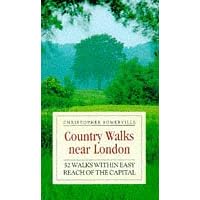 The fact that we went for a walk on Saturday shouldn't seem at all remarkable since that is an activity we like to do. The only reason it needs an exclamation mark is because I've been unwell since the beginning of the year and now I am finally better and a BIG hooray is all I can say to that.
We chose a route from Country Walks near London by Christopher Somerville, published by Pocket Books (52 walks within easy reach of London). We've lived in east London and had Essex on our doorstep for the last five years and we've barely explored this interesting county. We had to choose somewhere that we could reach by public transport since we don't own a car and this circular walk from a village near Romford which delights in the name of Havering-atte-Bower just fitted the bill. The middle part of the name is pronounced 'Atty' as was demonstrated for me by a man we met en route.
The guide book tells us that English monarchs used to stay at Havering Palace which was built by the side of the present village green and was well placed for hunting in nearby Hainault Forest. There were no signs of any Royals when the bus dropped us off but we were genially dismissed from the bus by a couple of old ladies who took it upon themselves to make sure that we alighted at the right stop. We promptly checked the return bus times as the bus only runs every 90 minutes and then headed into the church to see what there was to see. Unusually for an English village the church isn't particularly old. It's built from flint and looks in good condition and was finished in 1878. It was clear though when we roamed around the churchyard that there must have been an older church on that site as some of the headstones were quite ancient. All was revealed when we went inside and found an old engraving of a previous church that looked like a thatched cottage and it was demolished along with the Royal Palace. This had been St Mary's Chapel and was later rebuilt as the parish church and renamed St John the Evangelist.
That felt like a good start to our outing and we were so keen to get on with our walk that I quite forgot to look out for the old village stocks that stand on the corner of the green. We felt slightly hampered by not having an ordnance survey map with us which shows every bump and stand of trees in the landscape so we had to make do with the map in the book which didn't give us enough information. But it did get us to a very good pub called the Royal Oak which advertised itself as serving fresh fish delivered daily from Billingsgate Fish Market. We couldn't pass up this opportunity and thoroughly enjoyed sea bass with rice and stir fried vegetables - it was a cut above your usual pub grub.
Our route continued from the pub car park, round a sort of rubbish tip and down an alley behind some houses. Before too long we were strolling through some woodland and met a man who told us he used to live around there as a boy and hadn't been back in 30 years. He appeared to be on some kind of private pilgrimage and he soon left us preferring his memories to our company.
While I love nothing more than gawping at other people's houses especially ones that are built like modern day fortresses with gates, large dogs and numerous cars which are plentiful in Essex it was a joy to get into the countryside proper. This is where the walk started to work its magic. The air was clear, the sun was out and the act of putting one foot in front of the other and stopping every so often to look at the view improved my mood no end. At one point we had a very clear view of Canary Wharf and the office blocks in the City of London and we were walking through a field! This struck me as bizarre but we were only 14 miles away from the city.
My husband is the map reader in our marriage and he carefully followed all the directions and we obediently crossed streams and turned left and right when instructed. Or so we thought but we reached a road at the point where we expected to come out at St Mary's Church at Stapleford Abbotts so we had obviously gone very wrong. So we trudged along a road until we spotted what could be a church tower. The only trouble was that the public right of way marker pointing in that direction was contradicted by a 'private property' sign. What to do? Risk getting shot by an irate homeowner? We chose to be cowards at this point and went the long way round and finally reached the church that Nicholas Pevsner described as hideous. We weren't able to see what he found so offensive as the church was locked so we couldn't get inside. On phoning one of the numbers listed on the church door to see if we could get the key we learned that we could help out with a working party at the church on the following Saturday if we wanted to. Instead we sat on a memorial bench in the church yard and drank our tea from the flask and decided we would risk walking back to the main road via the public right of way and to hell with outraged home owners.
Subscribe to:
Posts (Atom)